Categories:
Hydrocephalus Medical Device Evaluation
Tags:
VP shunt
One of the most persistent questions in VP shunting remains unresolved:
Is a programmable valve alone sufficient—or should an antisiphon mechanism routinely be added?
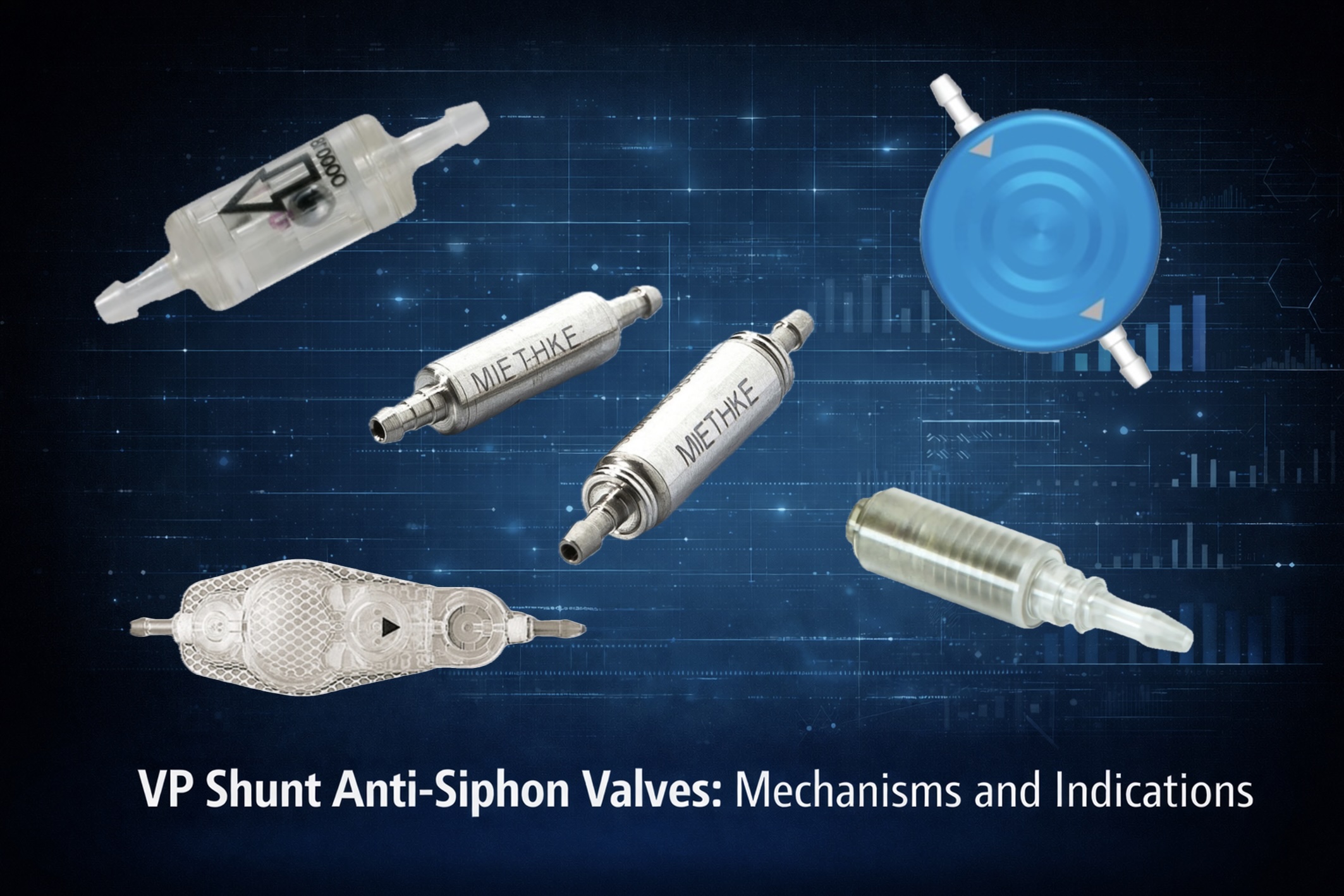
The mechanical rationale is clear. Upright posture introduces negative hydrostatic pressure that increases overdrainage risk. Antisiphon devices counter this through:
- Gravity-dependent resistance
- Flow-limiting designs
- Membrane-based pressure responsiveness
- Integrated mechanisms within programmable valves
Yet after decades of use, practice patterns remain highly variable.
Some surgeons favor programmable valves alone, adjusting settings as physiology declares itself. Others routinely pair valves with antisiphon components. Still others reserve antisiphon devices for specific phenotypes: tall patients, slit ventricle physiology, posture-sensitive symptoms.
The literature offers mechanistic rationale and selective outcome data—but real-world results are harder to generalize. Revision rates, underdrainage patterns, and symptom recurrence often depend on patient-specific factors rather than device class alone.
In practice, many decisions still come down to what has worked—or failed—in your own hands.
That gap between theory and lived experience is what NeuroSpine Product Review was built to document. Not to prescribe a “correct” approach, but to understand how these configurations actually perform across different patient populations and surgical practices.
For those managing hydrocephalus in adults or children:
How do you decide when to add an antisiphon device? Do you routinely pair it with programmable valves, or selectively avoid it based on patient factors?
Your real-world experience matters more than any single study. Contribute what you’ve actually seen—what works, what doesn’t, and where the surprises occurred.
https://neurospineproductreview.com/browse-products/anti-siphon-valves
#Neurosurgery #Hydrocephalus #PediatricNeurosurgery