Categories:
Spine Surgery Technology Surgical Innovation
Tags:
Cervical Arthroplasty disc replacement Spine surgery
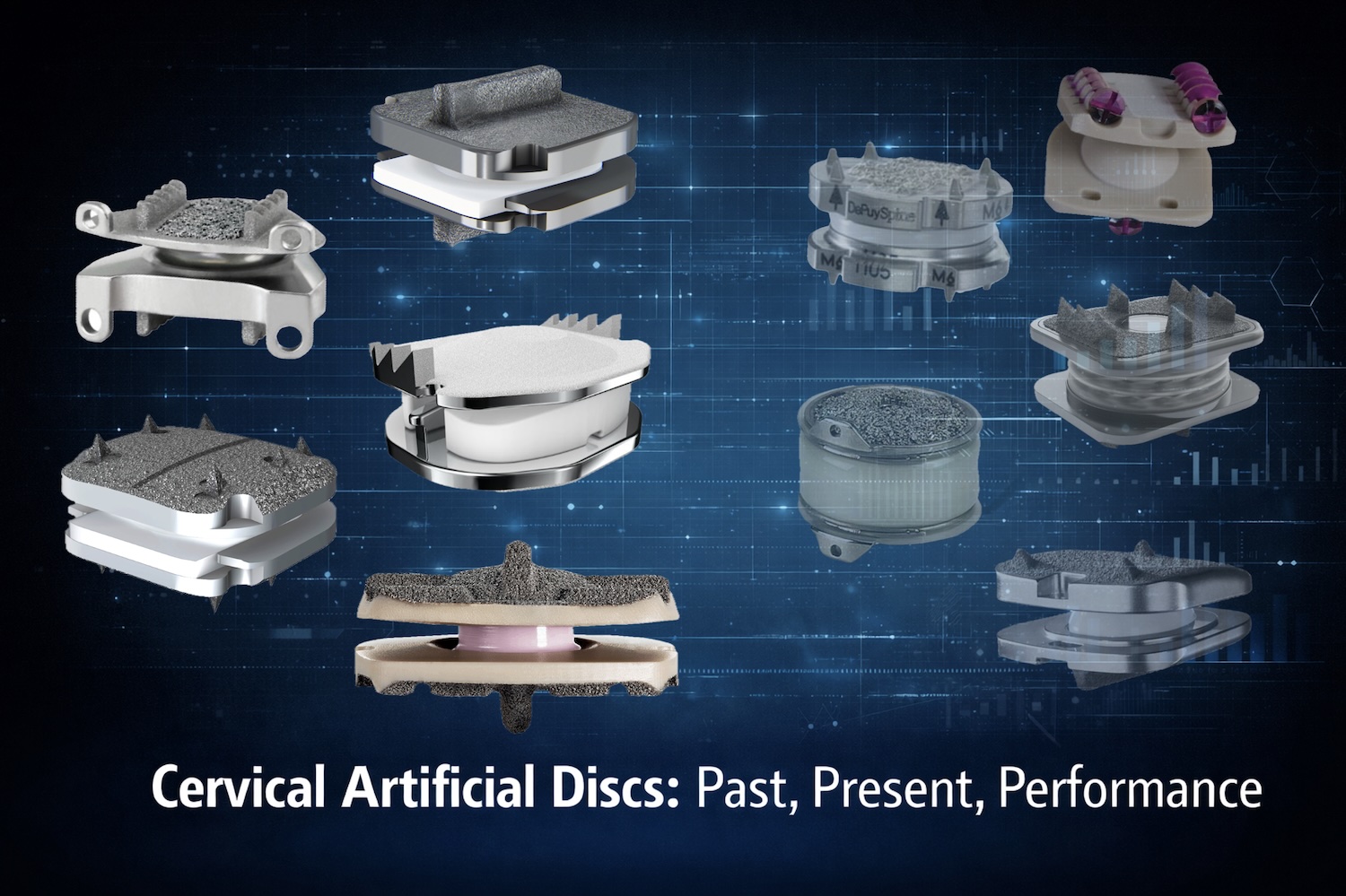
Remember the Prestige LP? The ProDisc-C before the design change? The Bryan Disc before it quietly left the U.S. market?
If you implanted cervical discs in the 2000s, you do. If you didn’t, you probably have no idea what happened to them—or why.
Cervical arthroplasty didn’t start with the devices we use today. It evolved through multiple design generations, some of which were abandoned after surgeons reported heterotopic ossification patterns, subsidence issues, or facet complications that only became clear years post-op.
That institutional knowledge is disappearing.
When a disc leaves the market, its performance data often goes with it. New surgeons evaluate current devices in a vacuum, without knowing:
- What’s already been tried and discarded
- Which design features failed in real-world use
- Why certain concepts were abandoned
NeuroSpine Product Review is the first platform that lets you toggle between current devices and legacy implants—so you can see not just what’s available now, but what came before and what we learned.
If you’ve implanted cervical discs—current or discontinued—your experience is part of that record.
Claim your profile and document what you’ve seen. The next generation of motion preservation depends on preserving this generation’s surgical memory.
List of All Cervical Disc Replacement Options
#Neurosurgery #SpineSurgery #CervicalArthroplasty